The unassuming milestone in marine research
A compass reading marks the one trillionth data record: How Werum uses Insightics Marine to bring research data together and support marine science.
It is 12 January 2021, just before 2:30 a.m.
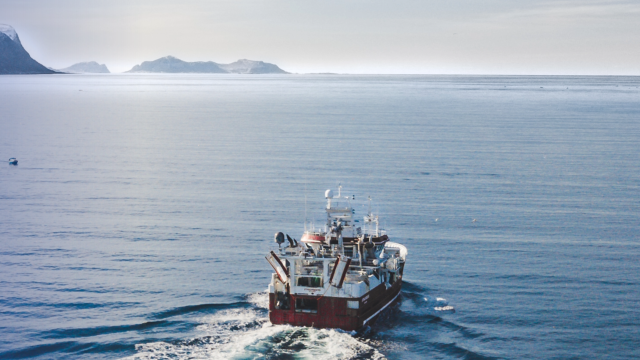
The research vessel SONNE is sailing through the North Atlantic, around 700 kilometres southwest of Ireland, heading towards the deep-sea basins between Iceland and the Azores. The IceDivA expedition is underway on board.
This voyage was never originally supposed to take place in this form. The COVID-19 pandemic had disrupted the regular research cruise schedule, and what had been a cancelled voyage was quickly turned into a deep-sea expedition to study marine biodiversity.
That night, something happens that goes unnoticed by everyone on board. At 02:26:40.522, the SONNE's gyrocompass records a routine reading: course 244.9 degrees, true bearing southwest.
An ordinary navigation reading, like those generated on board every second. And yet, this one is special. It is the one trillionth data record ever stored in Werum's maritime research data management system, Insightics Marine.
The value lies in the volume of data
You might be disappointed. No spectacular deep-sea discovery, no groundbreaking measurement – just a simple compass reading. But that is precisely what makes it such a good example.
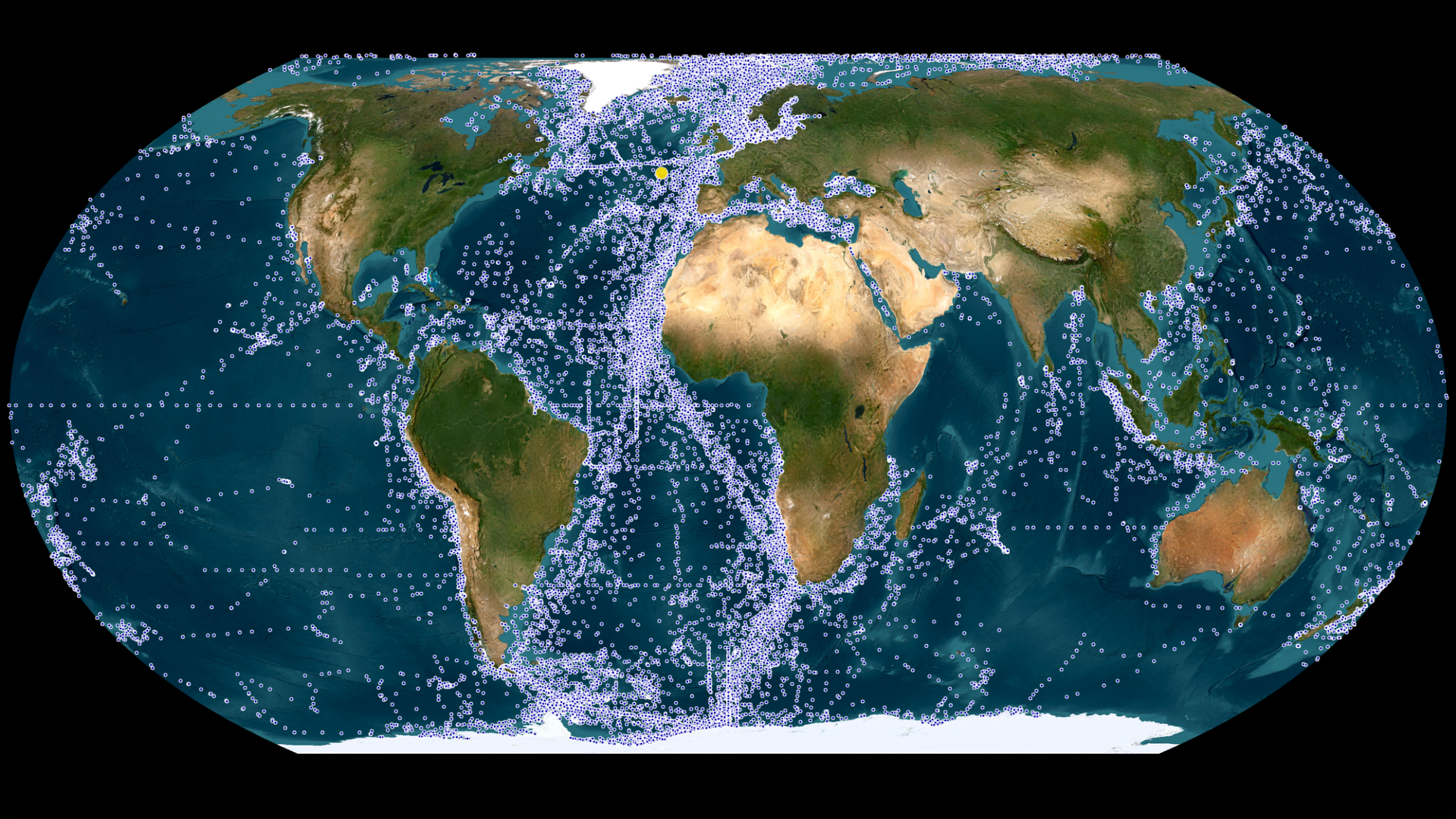
The scientific value only emerges when hundreds of billions of such readings are continuously linked with timestamps, positions and metadata. Otherwise, data collected on research vessels, underwater robots, aircraft, buoys and research stations remain scattered across separate, proprietary systems. Once brought together, they can be analysed across vessels, missions and years, providing the foundation for new scientific insights.
The SONNE's compass reading thus represents the real achievement: bringing order and connectivity to data on a massive scale.
From one trillion to 1.46 trillion
The one-trillion-record milestone was reached with that January 2021 data record from the SONNE. Since then, the volume has continued to grow steadily with every expedition undertaken by Germany's research fleet.
As of 3 November 2026, the system manages more than 1.46 trillion sensor data records, to be precise, 1,464,051,539,180.
A large proportion of this data comes from previous years. With Insightics Marine, Werum has replaced the existing DSHIP archives at several institutes and migrated their entire data holdings to the new platform. What were once numerous separate archives have become a shared, searchable data resource.
The quality-assured, long-term publication of individual scientific datasets continues to take place in established repositories such as PANGAEA. Werum's Data Hub provides the central integration and connectivity of the underlying raw data.
Added value for research
Institutions such as the Alfred Wegener Institute (AWI), GEOMAR Helmholtz Centre for Ocean Research Kiel, the Leibniz Institute for Baltic Sea Research Warnemünde (IOW) and the Federal Maritime and Hydrographic Agency (BSH), all part of the German Marine Research Alliance (DAM), collect valuable data through considerable effort. Every day at sea is costly, and every measurement is unique. This makes it all the more important to ensure that these data remain discoverable, accessible and usable for analysis – rather than disappearing into isolated systems, where finding them again requires in-depth technical knowledge.
This is exactly where Insightics Marine comes in. At several of these institutes, Werum has replaced the existing DSHIP archives with its highly scalable Insightics Marine platform, bringing the separate data holdings together in a single cluster.
Insightics Marine provides scalable storage for structured and unstructured data, removes boundaries between proprietary systems, supports cluster-based data processing and enables interactive access through a secure SQL API and tools such as JupyterLab. This makes analyses possible that were previously hampered by fragmented data sources and the sheer volume of data.
The integrated AI assistant allows users to formulate complex questions in natural language and generate suitable queries for the Insightics Data Lake.
More than one trillion data records demonstrate that this approach works even at the scale of Germany's research fleet.
The one trillionth data record was a compass reading in the middle of the Atlantic. The next milestone is sure to follow, somewhere between the Arctic and the South Pacific, aboard a vessel that is collecting data right now.