
Werum supports Lüneburg school team in the CanSat competition
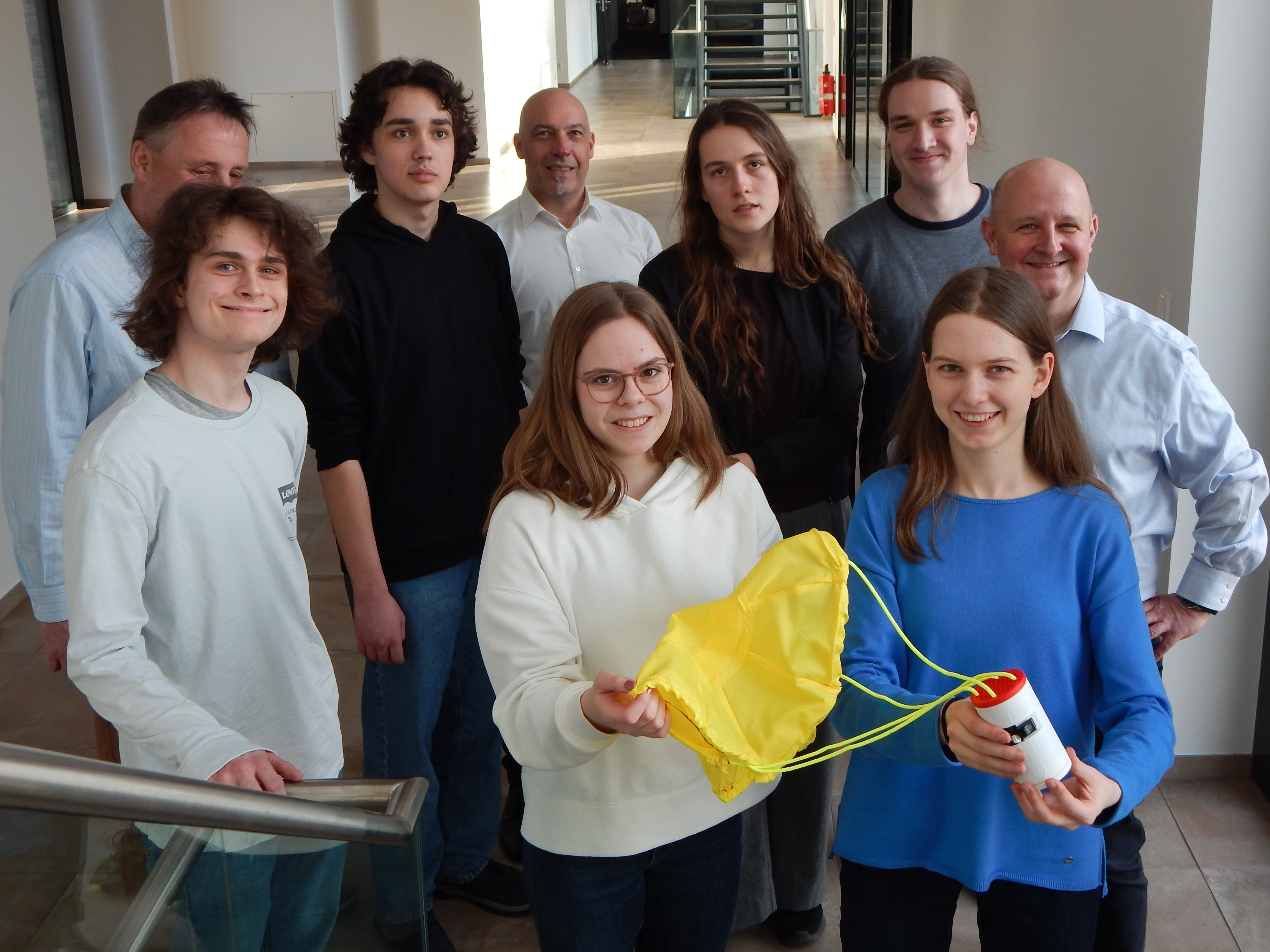
The CanSat competition stands for space exploration, STEM, and young talents passionate about technology. This year, a team from Herderschule Lüneburg is one of ten selected groups participating in the prestigious competition – and is receiving support from Werum.
Promoting young talent is a high priority at Werum. The company is actively committed to inspiring young people to take an early interest in mathematics, computer science, natural sciences, and technology. Werum is therefore especially pleased to financially support the six students from Lüneburg in their CanSat project.
In Lüneburg, Werum offers apprenticeships in the fields of application development and system integration. In addition, students have the opportunity to pursue a dual study program in Applied Computer Science or Computer Engineering at Werum.
More information about training at Werum: https://www.werum.de/en/apprenticeship
The project also directly relates to the core competencies of the software company. In the CanSat competition, teams independently develop a mini satellite the size of a beverage can that collects data during a rocket flight, which is then analyzed after landing. This is precisely where Werum’s expertise lies: collecting, storing, processing, and managing large volumes of data – whether in space exploration, marine research, or industrial testing facilities.
One example is the Copernicus Long-Term Archive (LTA), implemented on behalf of the European Space Agency (ESA) and the European Union, through which Werum has impressively demonstrated its capabilities in handling data on the petabyte scale.
By supporting the Lüneburg team, Werum combines social commitment with technological expertise – while also investing in the specialists of tomorrow.
About the competition (see https://www.cansat.de/start)
A CanSat is a “satellite” the size of a beverage can that is designed, built, and programmed by students. This mini satellite is launched to an altitude of several hundred meters by a rocket and then descends back to the ground using a recovery system. During the flight, it must complete a predefined primary mission as well as a self-developed secondary mission.
A CanSat project mirrors a real space mission, as it follows essentially the same phases: mission planning, satellite design and construction, testing of individual components and the overall system, execution of the mission, processing and analysis of the collected data, and communication of the results. In this way, the CanSat competition gives students interested in science the opportunity to gain their first practical and authentic experience with a space project.
The German CanSat competition has been held annually since 2014. Companies and institutions from the aerospace sector stand behind the competition. The highlight is the launch campaign at the end of each competition. For this event, the teams gather in Bremen – the “City of Aerospace” – for five days to present their CanSats to the jury and launch them on a rocket. During the week, participants also receive an exclusive behind-the-scenes look at Bremen’s space institutions. The winning team is invited by ESA to visit ESTEC (European Space Technology and Research Centre, ESA site in Noordwijk, Netherlands).